
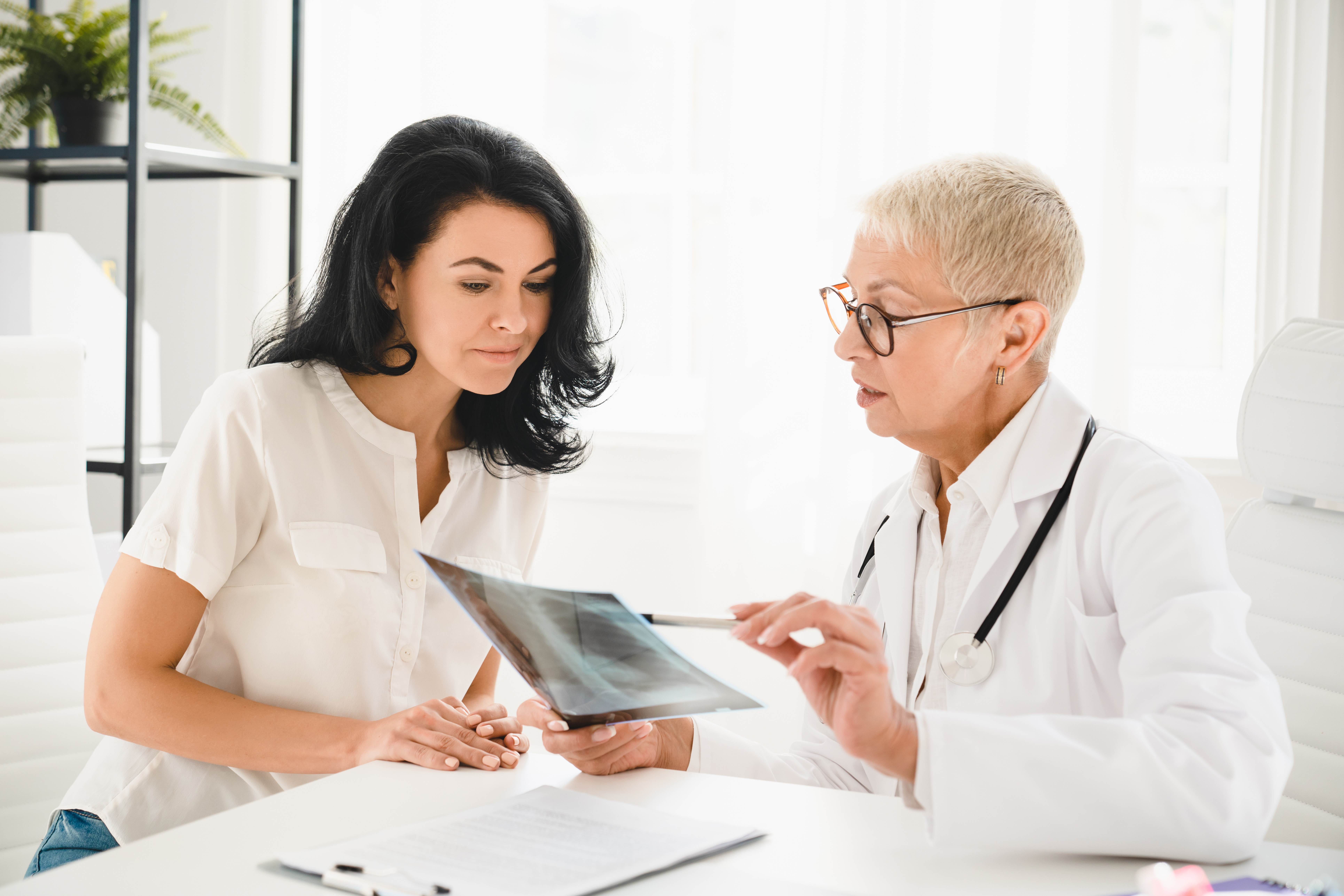
Hot flashes, sleep changes, and irregular periods may be some of the more noticeable signs of menopause. But another important change can be happening where you can’t see or feel it: in your bones.
As estrogen levels decline during and after menopause, women can lose bone mass more quickly. Over time, that can increase the risk of osteoporosis, a condition that makes bones weaker and more likely to fracture. According to the U.S. Office on Women’s Health, more than 8 million of the estimated 10 million Americans with osteoporosis are women.
The good news is that there are ways to protect your bone health. Understanding your individual risk, getting screened when appropriate, staying active, and paying attention to nutrition can all make a difference during menopause and well beyond it.
Why Does Menopause Affect Bone Health?
Bone may seem solid and unchanging, but it is living tissue that is continually being broken down and rebuilt. Throughout life, your body works to maintain a balance between removing old bone and replacing it with new bone.
Estrogen plays an important role in that process by helping protect bone density. As women move through menopause and their ovaries produce much less estrogen, that protection decreases. The Office on Women’s Health explains that bone loss accelerates after menopause, increasing the risk that bones will become weak and brittle over time.
For some women, the change can be substantial. In fact, some women lose up to 25% of their bone mass during the first 10 years after menopause.
That doesn’t mean osteoporosis is inevitable. It does mean menopause is an important time to start thinking more intentionally about bone health.
What Is Osteoporosis?
Osteoporosis is a disease characterized by low bone mass and changes in bone structure that make bones more fragile and susceptible to fractures.
One of the challenges is that osteoporosis usually develops silently. You may lose bone density for years without experiencing symptoms. For many people, the first indication that something is wrong is a broken bone.
The hips, wrists, and spine are among the most common locations for osteoporosis-related fractures. Vertebral fractures can also contribute to back pain, loss of height, a curved spine, or changes in posture.
Fractures can have lasting consequences, particularly as we age. The U.S. Preventive Services Task Force (USPSTF) notes that osteoporosis-related fractures can lead to loss of independence and reduced ability to perform everyday activities. Only about 40% to 60% of people who experience a hip fracture regain their previous level of mobility and ability to perform daily activities.
Are You at Higher Risk for Osteoporosis?
Menopause is an important risk factor, but it isn’t the only one. Your overall risk reflects a combination of age, health history, family history, lifestyle, and other factors.
According to the USPSTF’s osteoporosis screening guidance, risk factors considered when evaluating postmenopausal women under age 65 include low body weight, a parental history of hip fracture, cigarette smoking, and excessive alcohol consumption. Certain medical conditions and medications may also increase fracture risk.
Inadequate calcium and vitamin D intake and insufficient physical activity are also among the factors that can contribute to osteoporosis risk.
This is why conversations about bone health should be personal. Two women of the same age may have very different risks based on their health histories and lifestyles.
When Should You Be Screened for Osteoporosis?
Because osteoporosis can develop without symptoms, screening can identify bone loss before a fracture occurs.
The primary screening test is a DXA, or dual-energy X-ray absorptiometry, scan. This low-dose X-ray measures bone mineral density and helps your healthcare provider determine whether your bones show signs of osteoporosis.
Current USPSTF recommendations call for osteoporosis screening in all women age 65 and older. The Task Force also recommends screening postmenopausal women younger than 65 who have one or more risk factors and are determined through clinical risk assessment to be at increased risk for an osteoporosis-related fracture.
That means you don’t necessarily have to wait until 65. If you have gone through menopause and have additional risk factors, talk with your OB/GYN or healthcare provider about whether earlier screening makes sense for you.
What Can You Do to Protect Your Bones?
You can’t control every risk factor for osteoporosis, but everyday choices can help support stronger bones.
Get Enough Calcium and Vitamin D
Calcium is essential for building and maintaining bone, while vitamin D helps your body absorb calcium. Your needs can vary based on age and other health factors, so talk with your healthcare provider about how much you need and whether you can get enough through your diet or might benefit from supplementation. The National Institute of Arthritis and Musculoskeletal and Skin Diseases (NIAMS) recommends a nutritious diet with adequate calcium, vitamin D, and protein to help minimize bone loss and maintain bone health.
Keep Moving
Regular physical activity benefits your health in many ways, including your bones. Weight-bearing activities such as walking, jogging, dancing, and tennis make your body work against gravity and can help maintain bone strength. Strength or resistance exercises can also help maintain muscle, while improving coordination and balance.
NIAMS identifies strength and resistance training as particularly beneficial for bone health and notes that exercise can also help reduce fall risk as we age.
Don’t Smoke
Smoking is associated with weakened bones and is another reason to consider quitting if you currently smoke. The National Institute on Aging includes avoiding smoking among the steps adults can take to help keep bones strong as they age.
Be Mindful of Alcohol
Heavy alcohol use can harm bone health and can also increase the risk of falls. The National Institute on Aging recommends limiting alcohol consumption as part of maintaining bone health.
These habits matter before menopause, too. The stronger your bones are going into midlife, the more bone mass you have to draw from as age-related bone loss occurs. The nonprofit Bone Health & Osteoporosis Foundation emphasizes that osteoporosis prevention is a lifelong process and that nutrition and regular exercise can help protect bones at every age.
Don’t Forget About Fall Prevention
Protecting your bones is only part of preventing fractures. Reducing your risk of falling matters, too.
Maintaining strength, balance, and mobility can help you stay steady on your feet as you get older. It’s also worth looking at your home environment: loose rugs, poor lighting, cluttered walkways, and slippery surfaces can create avoidable hazards.
The National Institute on Aging recommends staying physically active, incorporating balance and strength exercises, reviewing medications, having your vision checked, and addressing potential hazards around the home to help reduce fall risk.
Certain medications or changes in vision can also affect balance. If you’ve experienced falls, dizziness, or problems with stability, bring them up with your healthcare provider rather than treating them as an unavoidable part of aging.
What If You Already Have Bone Loss?
A diagnosis of low bone density or osteoporosis doesn’t mean a fracture is inevitable. It gives you and your healthcare provider an opportunity to take action.
Depending on your bone density, fracture risk, age, health history, and other factors, your provider may recommend lifestyle changes, closer monitoring, or medication. Several medications are available to slow bone loss or reduce fracture risk, and the right treatment depends on your individual circumstances.
NIAMS notes that osteoporosis treatment may include medications along with nutrition, exercise, and other lifestyle measures. Treatment should be individualized based on factors such as age, other health conditions, osteoporosis severity, and fracture risk.
If you’ve already experienced a fracture from a relatively minor fall or injury, make sure your healthcare provider knows. Because osteoporosis can progress without noticeable symptoms, a fracture may be an important reason to evaluate your bone health more closely. NIAMS describes osteoporosis as a “silent” disease, with some people unaware they have it until a fracture occurs.
Make Bone Health Part of the Menopause Conversation
Menopause is about more than managing the symptoms you can feel. It’s also an opportunity to think proactively about the health changes happening beneath the surface.
Ask your OB/GYN about your osteoporosis risk, especially if you have a family history of osteoporosis or fractures, a low body weight, smoke, drink heavily, take medications that can affect bone health, or have other risk factors. If you’re approaching or past age 65, make sure bone density screening is part of your preventive healthcare conversations.
The National Institute on Aging notes that women become more vulnerable to osteoporosis after menopause and recommends staying active and getting adequate calcium and vitamin D as part of protecting bone health during this stage of life.
At CT Coastal OB/GYN, we’re here to help you navigate menopause and the years that follow with a better understanding of how your health needs may be changing. Talk with your provider about your bone health, osteoporosis risk, and the preventive steps that can help keep you healthy and active for years to come.